Fracht Group Australia Logistics News - April 2026
1/4/2026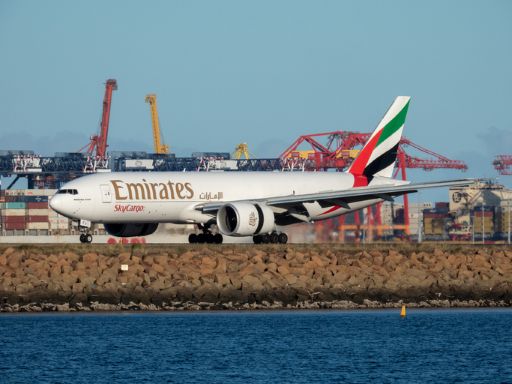
"In the middle of every difficulty lies opportunity."
- Albert Einstein
AROUND THE WORLD
- CONTAINER LINES HAVE SUSPENDED MIDDLE EAST CARGO bookings and diverted vessels following the closure of the Strait of Hormuz amid escalating conflict. Major carriers including MSC, CMA CGM, Cosco, ONE and others have halted bookings or rerouted services, while some vessels have been diverted around the Cape of Good Hope. War-risk and emergency surcharges have been widely imposed, with significant cost increases for cargo bound for Gulf and Red Sea ports. Industry sources report vessels discharging Gulf-bound cargo at alternative ports such as Salalah, Sohar and Khor Fakkan for onward transport. The conditions have been described as highly volatile, with congestion risks building across regional transhipment hubs.
- AIR CARGO SUPPLY CHAINS are increasingly relying on road transport across the Middle East as flight disruptions and airspace closures persist. Forwarders report strong demand for cross-border trucking, particularly via Saudi Arabia, to reposition freight between operational airports. The disruption has driven sharp airfreight rate increases on several trade lanes, reflecting constrained capacity.
- SOME MIDDLE EAST CARGO SERVICES HAVE RESUMED, but airlines continue to operate under significant restrictions. Emirates SkyCargo confirmed cargo movements through available belly and freighter capacity, prioritising backlog clearance, while Etihad announced limited passenger and freighter operations to selected destinations. Qatar Airways Cargo services remain largely suspended due to airspace closures, operating only limited freighter flights not routed through Doha. Several European carriers, including Lufthansa Cargo and Air France KLM Martinair Cargo, have also maintained suspensions or restrictions across multiple regional destinations.
- THE PANAMANIAN GOVERNMENT HAS TAKEN CONTROL of the Balboa and Cristobal container terminals from Hutchison Ports’ Panama Ports Company and transferred operations to APM Terminals and MSC’s Terminal Investment Limited. The move followed a Supreme Court ruling and an executive decree ordering the temporary occupation of port assets to maintain continuous operations. Hutchison described the action as unlawful and confirmed it is pursuing legal remedies. Authorities stated there would be no job losses, with employees transferred under employer-substitution arrangements.
- FREIGHT RATES ON MAJOR TRADE LANES are rising as carriers push through increases amid heightened geopolitical uncertainty and higher bunker costs. Despite relatively weak cargo volumes, shipping lines have announced multiple rate hikes, particularly on Asia–Europe and Asia–Mediterranean routes. Market data shows spot rates climbing across several corridors, with further increases planned through general rate increases and emergency surcharges. Bunker prices have risen sharply following energy supply disruptions, adding to carrier cost pressures.
- DUBAI AND OMAN HAVE AGREED to establish a customs “green corridor” to support cargo movements amid ongoing regional disruption. The arrangement enables cleared cargo arriving in Oman to move by land via the Hatta–Al Wajajah border crossing, with the system operating in both directions. The corridor supports shipments for local markets and free-trade zones under existing customs procedures. Industry sources say the initiative complements carriers’ growing reliance on alternative Gulf gateways such as Sohar, Fujairah and Khor Fakkan.
- RISING HOSTILITIES AROUND THE STRAIT OF HORMUZ are significantly increasing the complexity and cost of marine insurance claims, according to industry specialists. Claims are increasingly involving multiple insurance layers, including hull, P&I and cargo cover, as vessels and assisting assets sustain damage. War-risk insurance remains available but at sharply higher premiums, with some policies cancelled and reinstated under revised terms.
- CARRIERS HAVE ROLLED OUT a wave of emergency fuel surcharges and rate adjustments across ocean, intermodal and landside services following escalating Middle East conflict. Shipping lines are revising charges frequently in response to volatile fuel prices and supply uncertainty, with surcharges extending into inland transport in Australia and New Zealand. Carriers have announced additional general rate increases and administrative fees, citing sharply higher operating costs.
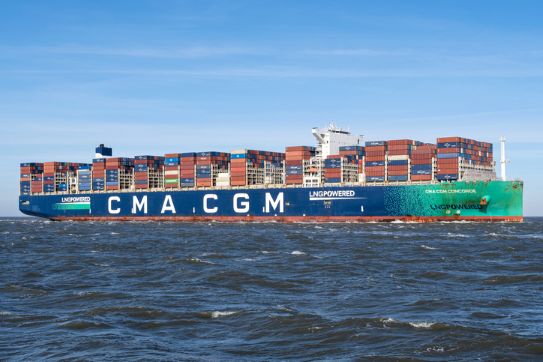
- CMA CGM HAS OUTLINED A RANGE OF MULTIMODAL LOGISTICS SOLUTIONS aimed at maintaining trade flows amid restrictions through the Strait of Hormuz. The carrier is using ports south of the strait, including Khor Fakkan, Fujairah and Sohar, as alternative entry points, supported by road and feeder connections to Gulf markets. Jeddah is also being used as a Red Sea gateway for onward inland transport.
- THE INTERNATIONAL MARITIME ORGANIZATION has formally called for the establishment of safe maritime corridors to ensure the protection of commercial vessels and seafarers affected by Middle East hostilities. The proposal was discussed at an extraordinary IMO Council session, with member states urged to elevate the issue to senior government levels. The IMO condemned attacks on civilian shipping and called for the continued provision of essential supplies to vessels unable to leave the region.
- AUSTRALIA AND THE EUROPEAN UNION have concluded negotiations on a Free Trade Agreement after more than eight years of talks. Most elements were settled by 2023, with final discussions resolving outstanding agricultural issues. The EU is Australia’s largest trading partner without an existing FTA, and the agreement is expected to lift Australia’s FTA trade coverage to around 88%. Once implemented, up to 98% of Australian goods exports are expected to enter the EU duty-free, alongside improved services access and reduced regulatory barriers. The agreement now moves to ratification in Australia and across EU institutions, with entry into force expected in 18–24 months.
SEAFREIGHT NEWS
- CMA CGM HAS INTRODUCED A SERIES OF EMERGENCY SURCHARGES across multiple trade lanes, citing operational constraints and equipment imbalances. The carrier announced an across-the-board per-container add-on from late February to mid-March, including an operational recovery surcharge on shipments from northern Europe to Pakistan. Additional levies apply to cargo moving from the Indian subcontinent and Middle East to destinations including Morocco, Colombia and Ecuador. CMA CGM has also introduced imbalance fees on short-term contract cargo from Ivory Coast and overweight container surcharges on West Mediterranean–US east coast trades.
- HÖEGH AUTOLINERS REPORTED A STRONG FINISH to 2025, delivering solid fourth-quarter and full-year financial results despite a volatile operating environment. The company recorded full-year revenue of USD 1.426 billion and net profit after tax of USD 513 million, supported by strong demand from contract customers and a high contract share. Höegh took delivery of its seventh Aurora Class vessel during the year and declared a substantial fourth-quarter dividend, payable in March 2026. The carrier said demand for ocean car transportation remains robust, particularly from Asia.
- CMA CGM REPORTED SOLID FINANCIAL RESULTS for 2025, driven primarily by the performance of its container shipping business, despite lower revenues year on year. Group revenue reached USD 54.4 billion, with EBITDA of USD 10.6 billion, while container volumes increased by 2.8% compared with 2024. Shipping revenues declined as average revenue per TEU (twenty foot equivalent unit) fell, but volumes outperformed the broader market in the fourth quarter.
- ZIM INTEGRATED SHIPPING SERVICES reported a sharp decline in profitability for 2025, reflecting lower freight rates and softer volumes, particularly in the second half of the year. Full-year revenue fell to USD 6.9 billion, while net income declined to USD 481 million from USD 2.15 billion in 2024. Average freight rates per TEU dropped significantly across both full-year and fourth-quarter results. Despite weaker earnings, ZIM highlighted substantial capital returns to shareholders since its IPO and outlined continued fleet renewal through new charter agreements for vessels scheduled for delivery from 2026 to 2028.
- COSCO SHIPPING HOLDINGS REPORTED lower profits for 2025 but said it operationally outperformed the broader market amid challenging conditions. Net profit attributable to shareholders fell to approximately RMB 30.87 billion, while container shipping volumes increased 5.76% year on year to 27.43 million TEU. Terminal throughput rose 6.22% to 153 million TEU, with steady margins in the terminal segment. COSCO said its financial position remains sound, supported by lower gearing and strong cash reserves.
AIRFREIGHT NEWS
- ETIHAD REPORTED RECORD AIRLINE PROFITS in 2025, supported by growth in its cargo division. Cargo revenues increased 8% year on year to USD 1.2bn, while volumes rose 9% to 703,000 tonnes. The airline attributed performance to expanded freighter and bellyhold capacity, alongside its joint business agreement with SF Airlines, which strengthened links between China and the Middle East. Etihad said it became the largest cargo operator between mainland China and the Middle East, operating more than 100 monthly cargo services.
- MIAMI INTERNATIONAL AIRPORT RECORDED ITS SIXTH CONSECUTIVE year of air cargo growth, with volumes rising 13.6% year on year in 2025 to almost 3.5m tonnes. The airport said imports continue to be dominated by perishables from Latin America, while exports are led by high-value manufactured goods such as telecommunications equipment and computers. In December, the value of trade handled at the airport increased 8.7% year on year. More than 40 freighter airlines operate scheduled or charter services at Miami, alongside 56 passenger carriers providing bellyhold capacity.
- AIR FRANCE KLM MARTINAIR CARGO WILL LAUNCH a new freighter service to Incheon, South Korea, from 30 March, operating three times weekly using Boeing 747-400 freighters. The service will be integrated into the carrier’s Amsterdam–Hong Kong rotation, increasing that route’s frequency to six weekly flights. The airline said the new service reflects growing demand and the strategic importance of South Korea as a manufacturing and logistics hub.
- EMIRATES SKYCARGO IS EXPANDING ITS INDIAN NETWORK with two additional freighter services launching in March. A new weekly freighter to Mumbai will operate via Singapore, while a dedicated weekly freighter will serve Ahmedabad directly from Dubai. The airline said it expects to carry pharmaceuticals, perishables and consumer electronics on the routes. Emirates currently operates three weekly freighters to India, alongside extensive bellyhold capacity on passenger services to nine Indian gateways.
- AIR CARGO CAPACITY ON THE ASIA–EUROPE TRADE LANE fell 26% following Middle East airspace closures, according to Aevean data. Capacity via Gulf stopovers declined sharply, while direct Asia–Europe capacity increased as airlines rerouted aircraft. The disruption exposed the corridor’s reliance on Middle East hubs, which typically handle around half of Asia–Europe traffic. Alternative technical stops in Central Asia saw increased activity, while capacity from India and South Asia fell significantly. Industry data showed global air cargo capacity dropped by up to 18% week on week.
- AIRLINES AND AIRPORTS CONTINUED EFFORTS to clear backlogs created by flight suspensions and airspace closures across the Middle East. Limited services resumed at some hubs, but carriers prioritised moving stranded cargo rather than accepting new bookings. Airlines including Emirates, Qatar Airways and Etihad confirmed ongoing restrictions, while others added limited bellyhold capacity on alternative routes.
- XENETA WARNED THAT AIRFREIGHT RATES could escalate sharply due to reduced capacity following Middle East disruptions. The data provider said global air cargo capacity is down by approximately 16–18%, with much steeper reductions in markets heavily reliant on Gulf carriers, including India. Xeneta noted that even trade lanes not directly transiting the region are being affected as airlines seek to optimise remaining capacity. The consultancy compared the situation to the Covid-19 period, when rates surged in constrained markets.
OCEANIA PORTS AND AIRPORTS
- LOGISTICS PROVIDER NSS HAS OPENED a new $5 million container and logistics facility at the Port of Townsville, expanding its storage capacity to 4,200 TEU across a 29,630?sqm site. The facility includes dedicated support for 230 refrigerated containers and brings NSS’s total footprint at the port to around eight hectares. NSS said the development responds to customer demand for higher-capacity, integrated logistics solutions, particularly for mining, refinery and agricultural sectors. The site features specialised warehousing for general and dangerous goods, a DAFF-approved machinery wash bay and a Customs 77G bond store. NSS manages about 20% of the Port of Townsville’s throughput and said the facility strengthens supply-chain capability across regional North Queensland.
- BULK CARGO OPERATIONS AT GLEBE ISLAND will end no later than 2030 under a New South Wales government decision to prioritise housing development, shifting bulk trade activity for greater Sydney to Port Kembla. The government announced a $270 million commitment to improve road access around Port Kembla and investigate increased rail freight capacity. Working harbour functions will be consolidated largely at White Bay, with the cruise terminal and deepwater berths retained in Sydney Harbour.
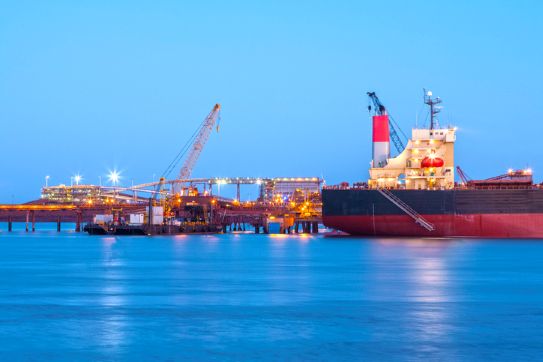
- OPERATIONAL CHANGES LIFTED PILBARA PORTS’ TOTAL THROUGHPUT to 55.9 million tonnes in February 2026, a 13% increase on the same month last year. The port authority said revised vessel movement guidelines, improved ebb-tide departure planning and enhancements to dynamic under-keel clearance systems enabled larger vessels to maximise available sailing windows safely. Port Hedland recorded a monthly throughput of 40.6 million tonnes, including 40 million tonnes of iron ore exports, marking its third consecutive month of record throughput. Dampier handled 12.5 million tonnes, up 25% year on year.
- PORTS ACROSS WESTERN AUSTRALIA activated cyclone response procedures as Cyclone Narelle intensified to a Category?4 system offshore. Pilbara Ports closed Ashburton, Cape Preston West, Dampier and Varanus Island, while Port Hedland remained open due to its location outside the immediate impact zone. Mid West Ports commenced clearing operations at Geraldton, with vessels departing and port infrastructure secured. Authorities warned of destructive wind gusts and extended gale conditions along the Pilbara and Gascoyne coasts.
CUSTOMER SERVICE
If you would like further information about any of the above items, please contact one of our friendly Fracht Team members at fracht@frachtsyd.com.au
Share this news via