Fracht Group Australia Logistics News - December 2025
1/12/2025
"Talent wins games, but teamwork and intelligence win championships."
- Michael Jordan

As we approach the end of the year, we’re pleased to share that Fracht Group Australia remains in a strong position. Thanks to our global network, our ability to adapt, and the dedication of our highly skilled team, we are well-placed to continue supporting both long-standing and new clients as they navigate today’s evolving logistics environment. With this final newsletter for 2025, we extend our heartfelt THANK YOU to our valued clients, suppliers, and colleagues across Australia and around the world for your ongoing trust and support. We wish you all a wonderful Christmas season and a prosperous, healthy and happy 2026.
In keeping with our tradition in recent years, we will once again make a charitable donation in lieu of sending Christmas cards and are again contributing AUD 1,700.00 to the Children’s Medical Research Institute, the organisation behind the Jeans for Genes Day fundraising campaign. CMRI is an independent institute with more than 170 scientists dedicated to discovering treatments and cures for serious childhood conditions. Their mission is to make the incurable curable. Around 1 in 20 children worldwide—12 every minute—are born with a genetic disease or birth defect, and each one deserves our support. Contributions like ours help CMRI pursue crucial research into the genetic foundations of conditions such as cancer, epilepsy, and other rare disorders, with the goal of developing new treatments that deliver better outcomes with fewer side effects.

AROUND THE WORLD
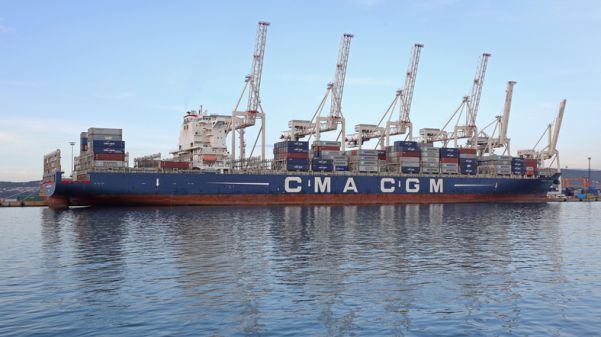
- RED SEA CEASEFIRE SPARKS HOPES FOR SUEZ RETURN – but war risk remains. A recent ceasefire declared by Houthi forces in the Red Sea has brought optimism for a return to Suez Canal transits, possibly as early as March. However, insurers are still treating the region as high risk, and industry experts caution that the situation remains delicate, with previous ceasefires having collapsed quickly. CMA CGM continues operations, supported by French naval escorts, while most carriers are waiting to see if peace holds before returning to the region.
- NEW DATA SHOWS TRADE WAR'S 'SUBSTANTIAL NEGATIVE IMPACT' on US container Imports. While global container volumes have continued to grow, new statistics show that US imports have suffered a significant decline due to ongoing trade tensions and tariffs. North America’s trade dropped 5% year-on-year, especially on transpacific routes. Analysts say the trade war has materially impacted US container flows, with some cargo redirected to emerging markets. Freight rates remain volatile.
- NEW ZEALAND EXPORTERS GET A BOOST FROM INDIA DEAL. Negotiations for a comprehensive free-trade agreement between New Zealand and India are advancing, offering new opportunities for exporters. Historically, high tariffs on dairy, wine, and meat have limited trade, but both governments are now focused on expanding two-way commerce. Key products include timber, wool, and apples, but capacity constraints for refrigerated cargo persist. The deal is expected to help diversify export destinations and strengthen economic ties.
- CMA CGM SIGNS UP TO BUY 20% STAKE in Eurogate’s Hamburg Terminal, marking a significant partnership aimed at supporting the port’s expansion and automation. The investment will help fund major infrastructure upgrades, including a new quay and increased handling capacity. The deal, expected to close in 2026 pending regulatory approval, will make CMA CGM a key player in Hamburg’s future growth, joining other major shipping lines with terminal interests and strengthening its position in European logistics.
- EAST AFRICAN PORTS have faced severe disruptions due to a combination of extreme weather and political unrest. Mozambique’s port operations have been hampered by storms, while civil unrest in Tanzania led to the closure of Dar es Salaam port, forcing vessels to reroute to Kenya’s already congested Mombasa port. CMA CGM responded by imposing a congestion surcharge on shipments to Beira, Mozambique, as delays stretched beyond two weeks. Shippers are advised to monitor updates closely as instability and congestion continue to affect schedules.
- OCEAN NETWORK EXPRESS (ONE) BOX SHIP TOWED TO SAFETY after catching fire in Los Angeles port. The ONE Henry Hudson was towed to safety after a fire, the seventh containership incident in five months. The US Coast Guard responded quickly, preventing further damage and ensuring the vessel’s safety. The event highlights ongoing safety concerns and the need for robust emergency protocols. Major carriers are increasingly focused on operational resilience and regional coverage to address such risks and maintain supply chain reliability.
SEAFREIGHT NEWS
- HÖEGH’S SOLID 3Q BUT TIMING UNLUCKY. Höegh Autoliners posted solid Q3 2025 results, with net profit of USD 131 million and volume up 3% from Q2. However, the announcement of new US port charges on foreign-owned PCTCs (Pure Car and Truck Carrier) led to a reduction in dividends and a drop in share price. The company estimates the charges will cost USD 60–70 million annually and may impact trade volumes. Despite strong demand out of Asia and stable contract share, Höegh expects Q4 performance to be slightly below Q3 due to these additional costs.
- MSC IS SET TO RE-FLAG twelve vessels under the Indian flag, following similar moves by CMA CGM and Maersk, as part of a broader strategy to strengthen operations in India. This initiative supports India’s maritime ambitions and supply chain resilience. The move comes amid a wave of investment agreements in shipbuilding, port development, and green transition sectors. Indian policies have become more favorable for fleet operators, incentivising national capacity. Industry observers expect more mainline carriers to follow, as a national fleet is seen as vital for managing strategic risks in energy and food imports.
- OCEAN NETWORK EXPRESS (ONE) faced a challenging second quarter in FY2025, with profit down 86% year-on-year to USD 285 million and revenue down 24%. First-half profit dropped 87%. CEO Jeremy Nixon emphasized the company’s resilience despite market volatility and geopolitical uncertainties. Cargo demand surged in July due to front-loading ahead of US tariff deadlines, but freight rates remained significantly lower than the previous year. ONE maintains a cautious outlook, expecting continued market uncertainty and focusing on operational flexibility.
- WALLENIUS WILHELMSEN ON ‘STEADY COURSE’. Wallenius Wilhelmsen reported Q3 2025 results in line with the previous quarter, with adjusted EBITDA of USD 471 million and net profit of USD 280 million. The company’s financial performance remained robust, supported by strong demand for ocean transportation from Asia and new business wins in Australia. However, new US port fees could impact future earnings, with the company working to mitigate these effects. CEO Lasse Kristoffersen expects underlying demand to remain strong into Q4, though financial performance may soften due to the port fee issue.
- A 'STRONG' Q3, CLAIMS BULLISH MAERSK CHIEF, as volumes rise but profits sink. Maersk reported a notable increase in Q3 volumes, with all trade lanes showing gains and overall volume growth expected to hover around 4% for the year. Despite this, revenue dropped 9.5% to USD 14.2 billion and EBIT fell 61% year-on-year. CEO Vincent Clerc highlighted operational efficiencies and strong sequential volume progression, especially in logistics and services. The company’s new ship investments aim to meet growing head haul demand, which is outpacing the market average. Maersk revised its full-year EBIT guidance to USD 3–3.5 billion, expecting results at the higher end if current trends continue.
- COSCO SHIPPING JOINS 3Q REVENUE SLUMP. COSCO Shipping Holdings reported a resilient Q3 in terms of liftings, but profits fell sharply year-on-year. Average revenue per TEU (twenty foot equivalent unit) dropped from USD 1,759 in Q3 2024 to USD 1,280 in Q3 2025, though this was an improvement over Q2. Net profit for Q3 was USD 1.2 billion, down 63% year-on-year. The company cited volatile shipping rates, geopolitical uncertainties, and slowing global trade demand as key challenges. Despite these headwinds, COSCO continues to focus on digital transformation and green operations, with terminal throughput rising 5.6% year-on-year to 113.28 million TEU.
- IDLE SHIPS RARE as MSC doubles down on vessel spree. Despite industry concerns about overcapacity, MSC continues to expand its fleet, with the idle container ship fleet remaining at just 0.9% of global capacity. Recent acquisitions bring MSC’s total to 461 second-hand vessels since 2020. Most idle ships are only temporarily out of service for drydocking. Analysts warn that a return to Suez routings could release more tonnage, increasing oversupply. MSC’s aggressive buying spree shows the carrier’s commitment to growth and market dominance, even as the sector faces the risk of structural oversupply.
AIRFREIGHT NEWS
- LATEST BOEING DELAY sees large freighters remaining in short supply. Boeing’s latest delay to the B777-X program means the freighter version is now unlikely before 2029, extending the shortage of large widebody cargo aircraft. The gap will be exacerbated by the end of B777-200F production in 2027, leaving a supply gap until new models arrive. While conversions of older 777s offer some relief, high demand and limited feedstock keep values high. Industry leaders warn of an “acute” shortage of large freighters, with relief only expected once new passenger 777-9s enter service and more aircraft become available for conversion.
- QATAR AIRWAYS CARGO 777 FREIGHTER delivery delayed by US Government shutdown. Their first Mammoth 777-200LRMF conversion is delayed due to the US government shutdown, pushing expected delivery to January. The airline, launch customer for the freighter conversion, remains confident the delay is months, not years. The shutdown has slowed FAA certification, affecting the timeline for all five aircraft on order. Qatar Airways had turned to conversions due to delays in Boeing’s new 777-8F, now not expected before 2028.
- KOREAN AIR has converted seven A350 passenger aircraft orders to the new A350F freighter, joining Air China Cargo in backing Airbus’s next-generation freighter. The A350F offers a 111-ton payload and up to 40% lower fuel consumption and emissions than previous models. Korean Air’s current freighter fleet includes Boeing 747s and 777s, and the airline is also merging with Asiana. The move is part of a broader industry trend toward more efficient, environmentally friendly cargo aircraft.
- AIR CARGO GROWTH SLOWS TO 4% in October as spot rates fall for sixth straight month. Global air cargo volume growth is slowing and spot rates have fallen for six consecutive months. Europe–North America volumes dropped 6%, and contract rates are down 8% year-on-year. E-commerce continues to drive Asia–Europe growth, but China–US e-commerce shipments have declined.
- TAIWAN CHIP EXPORTS drive record air cargo volumes to US as semiconductor demand surges, with July volumes surpassing even pandemic highs. Morrison Express’s CEO calls for more freighter capacity on the route, as Taiwan produces 80% of all chips and nearly all advanced chips. While some modal shift from ocean to air is temporary, long-term chip demand is expected to keep airfreight strong. US efforts to boost domestic chip production are unlikely to fully offset Taiwan’s dominance.
- AIR CARGO AIRPORT VOLUMES hit record 127 million tonnes in 2024, up 9.9% year-on-year and 4.1% above 2019. The top 20 cargo airports handled 42% of world cargo, with Hong Kong regaining the top spot. Growth was driven by maritime disruptions, e-commerce acceleration, and lower jet fuel costs. Asia Pacific and Middle Eastern hubs saw strong gains, while North America’s growth was modest. The outlook remains positive, but volatility from tariffs and geopolitics is expected to persist.
- E-COMMERCE AIR CARGO VOLUMES REBOUND after the US ended the de minimis exemption for China in May. China–US e-commerce air cargo volumes dropped 43% but rebounded to nearly 100,000 tonnes by September. Chinese e-commerce platforms have shifted focus to Europe and other regions, with Europe’s share of Chinese e-commerce rising. Industry leaders remain confident in long-term e-commerce air cargo growth, despite ongoing regulatory and geopolitical challenges.
- EMIRATES AND AIR CANADA EXTEND PARTNERSHIP and look at potential cargo joint venture. Emirates and Air Canada have extended their strategic partnership to 2032, aiming to enhance cargo services and explore a joint venture. The collaboration will boost bidirectional cargo flows between the Americas, Middle East, and Indian subcontinent. Emirates reported a 4% increase in cargo volumes in the first half of the year, while Air Canada’s cargo revenues fell due to strike-related flight cancellations. Emirates also announced a major Boeing order, further expanding its widebody fleet.
OCEANIA PORTS AND AIRPORTS
- GLADSTONE PORT CORPORATION has launched a Registration of Interest to attract global partners for developing a new container terminal. The proposed 54-hectare site at Port Central offers deepwater access, a sheltered harbor, and direct road and rail links. The terminal aims to boost supply chain resilience and unlock new trade pathways for Central Queensland. The port, already a major export gateway for resources and industry, handled over 117 million tonnes of freight last year. The ROI closes in March 2026, with the project seen as a key step in Gladstone’s strategy to become a fully-fledged container port.
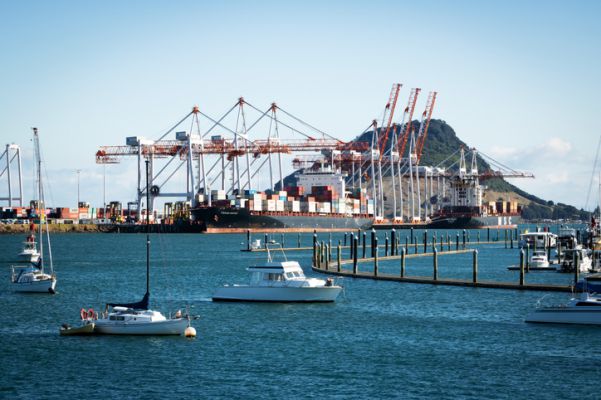
- STRONG Q1 FY 2026 FOR TAURANGA, as it reported a 5.9% year-on-year increase in cargo volumes and a 9% rise in container throughput for Q1 FY2026, reaching 6.6 million tonnes and 319,649 TEU. Growth was driven by higher bulk imports and containerised export transshipment. Despite berth capacity constraints, productivity gains have supported performance. The port expects full-year net profit after tax between NZD 137 million and NZD 147 million. Upcoming projects include acquiring a hybrid tug and deepening the main channel to accommodate larger vessels, ensuring Tauranga remains New Zealand’s busiest and most future-ready port.
- NORTH QUEENSLAND BULK PORTS (NQBP) is considering adding container facilities at the Port of Mackay to enhance supply chain efficiency for central Queensland businesses. CEO Brendan Webb outlined plans for infrastructure upgrades, including extending Wharf 1 and developing a heavy-duty laydown area. These investments aim to support mining, renewable energy, and diversified trade. NQBP’s ports handle over 150 million tonnes of trade annually, contributing AUD 35 billion to the Queensland economy and supporting 47,000 jobs. The move reflects Mackay’s evolution from a bulk sugar terminal to a diversified logistics hub.
- TASPORTS AND H2U GROUP have signed an MoU to explore a large-scale green hydrogen and ammonia production and export facility at Bell Bay, Tasmania. The project could initially produce up to 500,000 tonnes of green ammonia annually, supporting Tasmania’s renewable energy ambitions. The feasibility study will assess technical, economic, and environmental factors, including port infrastructure and workforce needs. If successful, the project could attract new industries, strengthen supply chains, and create skilled jobs. Bell Bay’s deepwater port and industrial complex make it an ideal site for green energy exports.
- ELECTRIFICATION AND THE PATH TOWARDS CLEANER PORTS. Australian ports are increasingly embracing electrification to decarbonize operations and support tenants’ sustainability goals. Oceon Energy is developing Electrified Ocean Networks to connect vessels, ports, and energy markets. Initiatives include renewable power networks at Port of Brisbane and shore power for ships in Melbourne and Burnie. Globally, the IMO’s GreenVoyage2050 program and Norway’s electric ferry fleet set examples for maritime decarbonization. Ports are seen as critical enablers for the transition, with industry and government collaboration needed to turn decarbonisation intent into large-scale delivery.
CUSTOMER SERVICE
If you would like further information about any of the above items, please contact one of our friendly Fracht Team members at fracht@frachtsyd.com.au